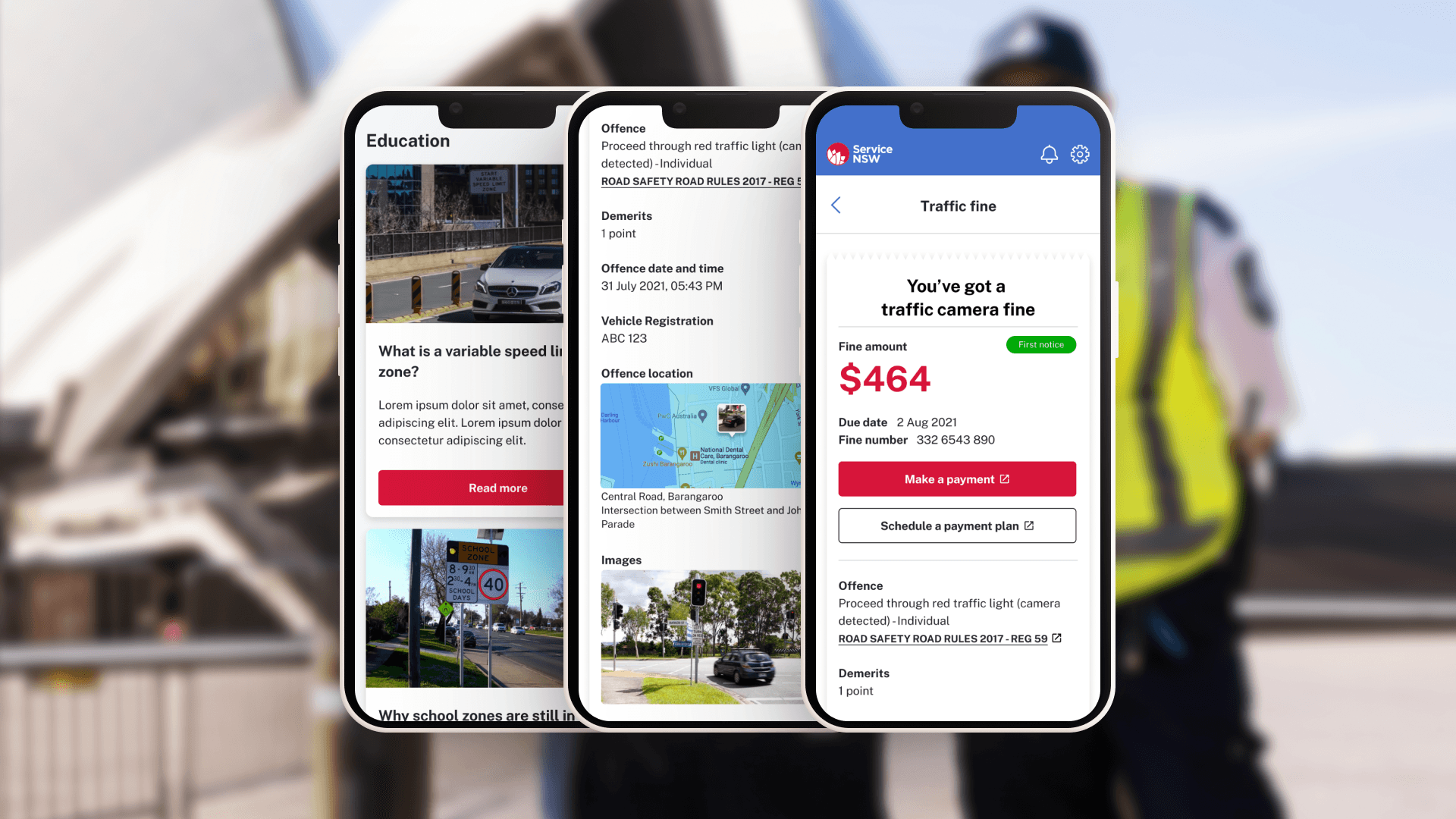

Solving NSW's Infringement Fines Management Experience
Overview
As a UX/UI Designer at PwC, I led a transformative 3.5-month engagement with NSW Revenue to address critical challenges in their infringement management system. The project aimed to rebuild trust, enhance digital transformation, and improve the overall citizen experience related to fines and infringements.
The Challenge
NSW Revenue faced significant issues with their infringement process:
Low trust in ticket officers and infringement notices due to insufficient proof
High rate of overdue fines and escalations to court proceedings
Communication breakdowns due to address changes or citizen negligence
Project Objectives
Our team was tasked with rebuilding trust between citizens and the NSW Revenue Department and Implementing digital transformation to provide more comprehensive infringement evidence. Further, we focused on Improving communication and instruction clarity and developing flexible payment plans to accommodate various financial situations.
Team structure
Our team was structured with a Strategy lead, Senior Researcher, UX/UI Designer (myself), Junior Business Analyst and Research graduate.
Taking a Customer-Centric and Design Thinking Approach To Understanding Core Problems.
We kicked off with our Discovery and Research
Our comprehensive research approach included:
Stakeholder interviews with department officials, NSW traffic police, and various infringement officers
One-on-one user research and focus group sessions
Analysis of existing technical systems
Quantitative and qualitative data analysis of infringement patterns across different suburbs and councils
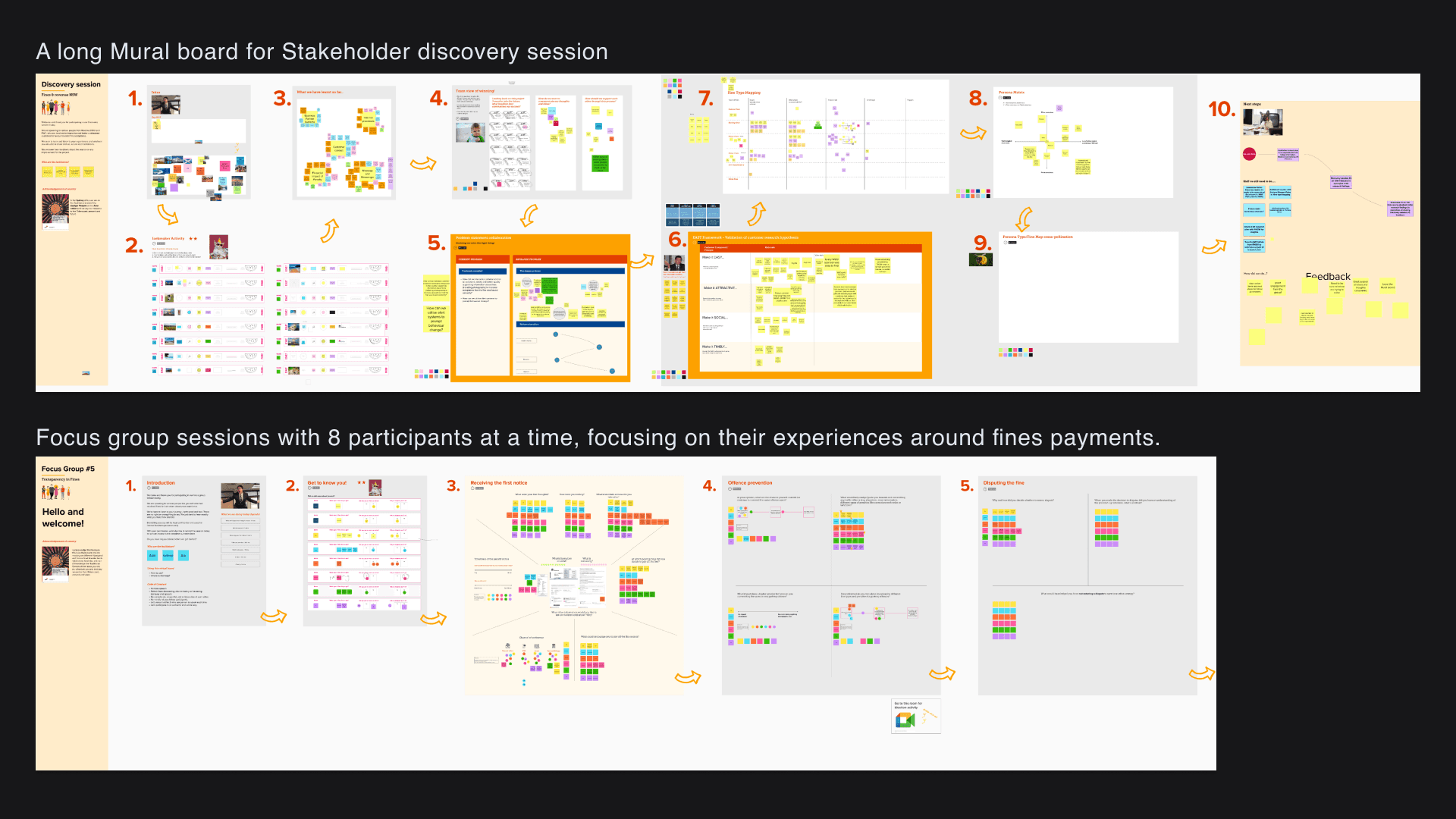
Miro-facilitated focus group workshops with over 50 NSW residents who had received infringement notices
Discovery workshops and focus group studies. (Board too big to be zoomed!)
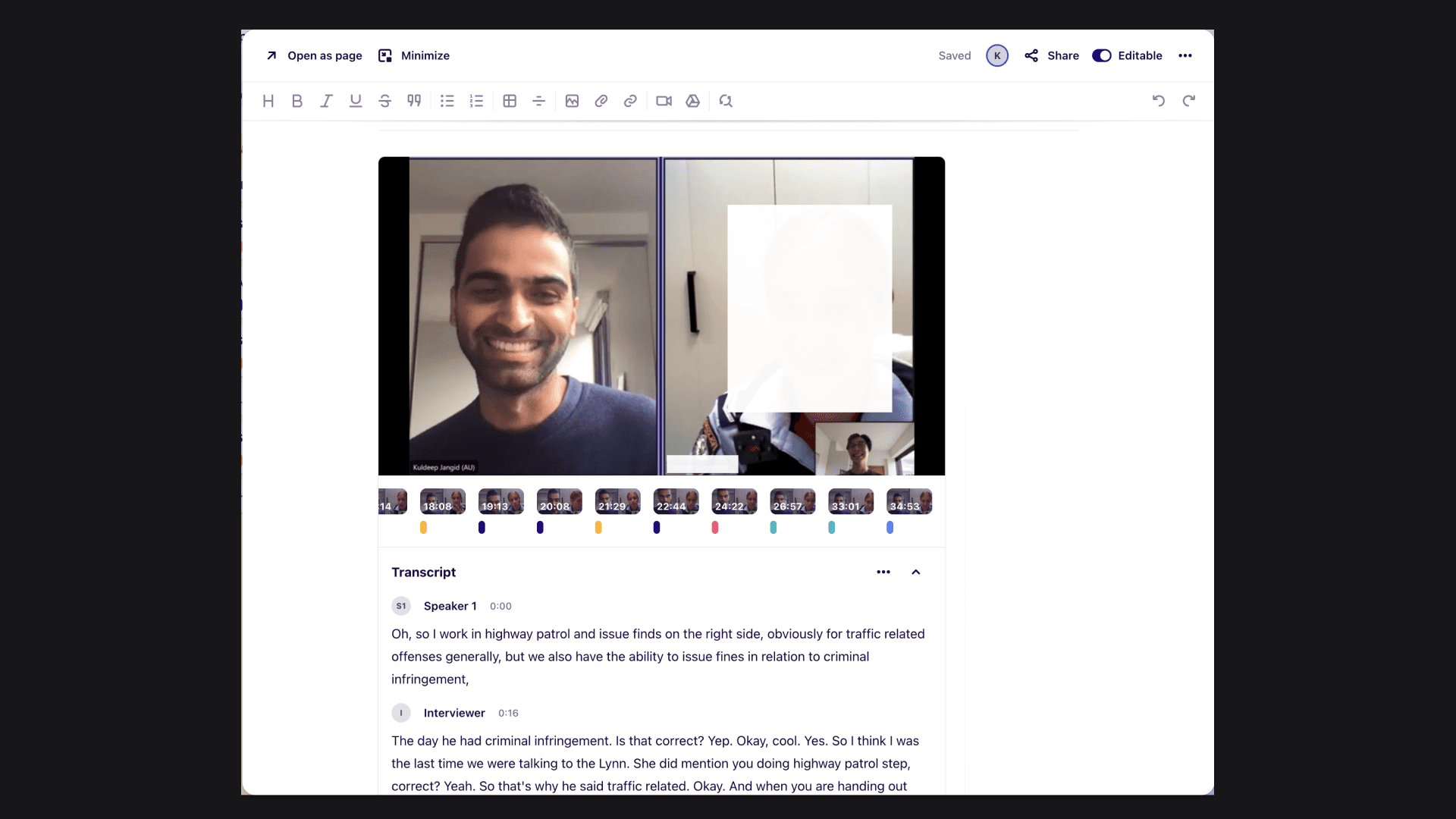
(Sharing some laughs with the police officer while interviewing them!)
Insight Generation
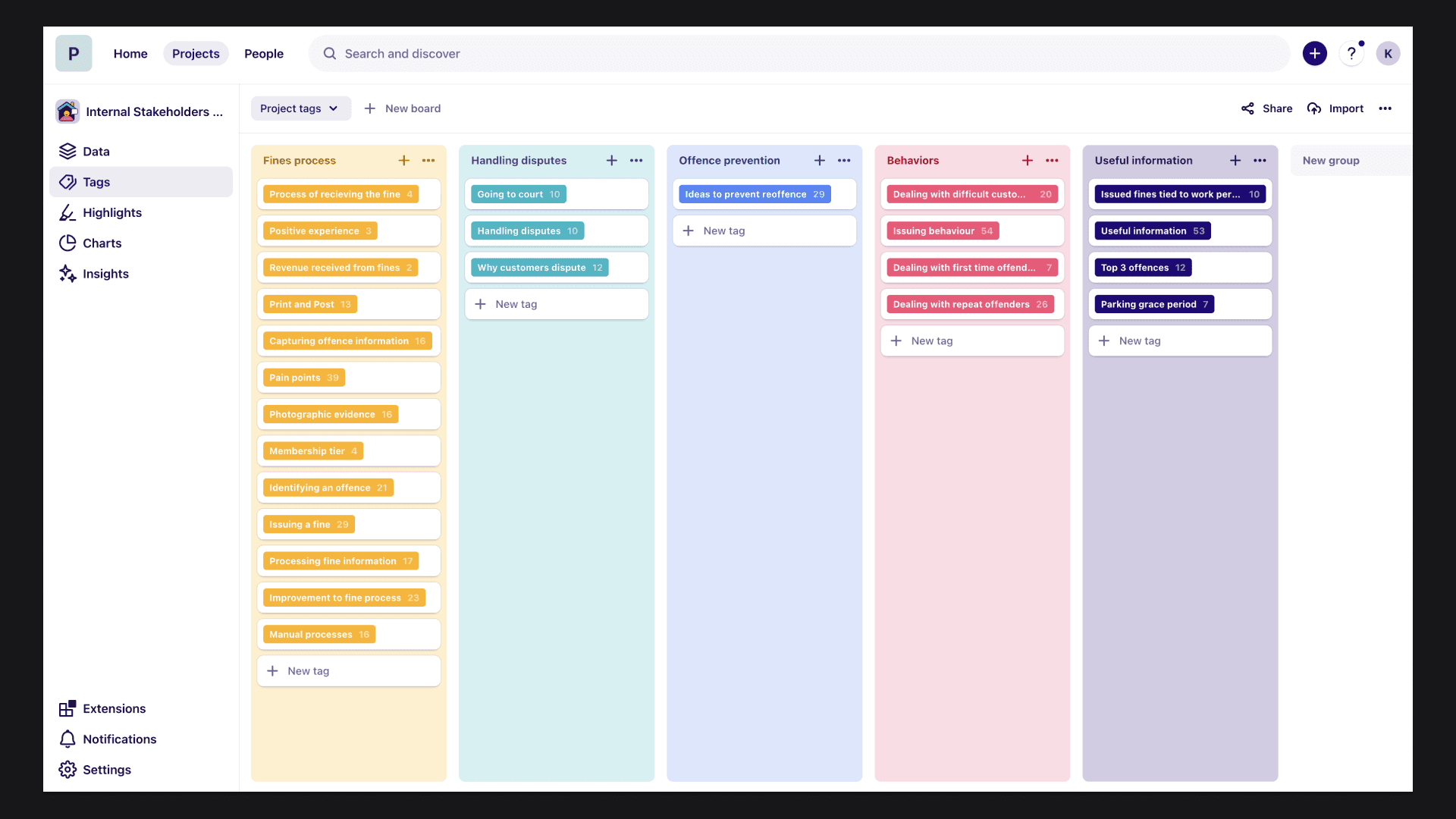
We utilised advanced tools and methodologies to synthesise our research. Using tools such as Dovetail for data aggregation, key insight highlighting, and pattern recognition, while also focusing on the development of comprehensive customer experience journey maps and future state maps. We staged identification of user actions, emotions, platform interactions, and exit points throughout the infringement process on the journey maps.
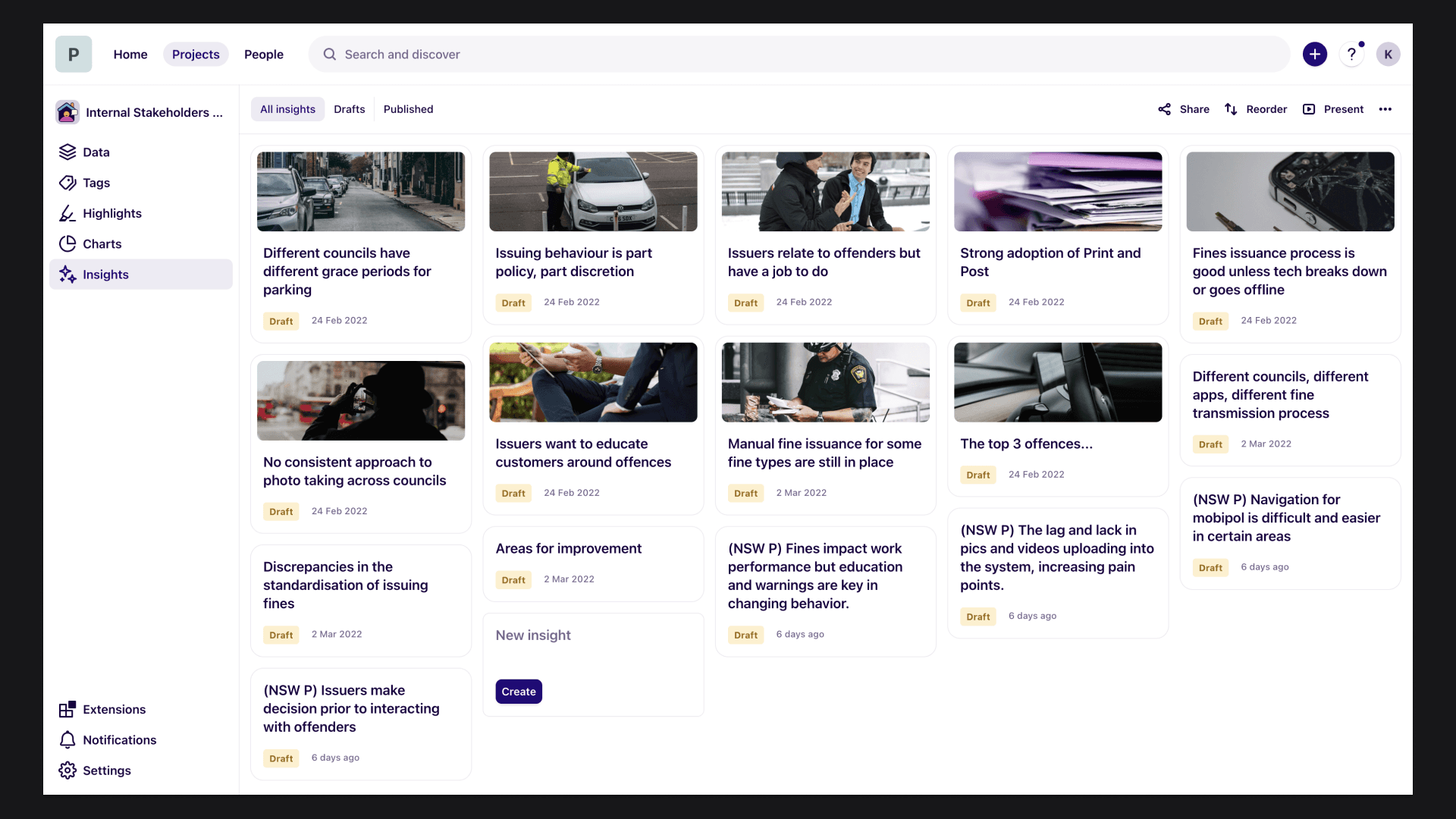
Mapping insights on a Customer Experience Map
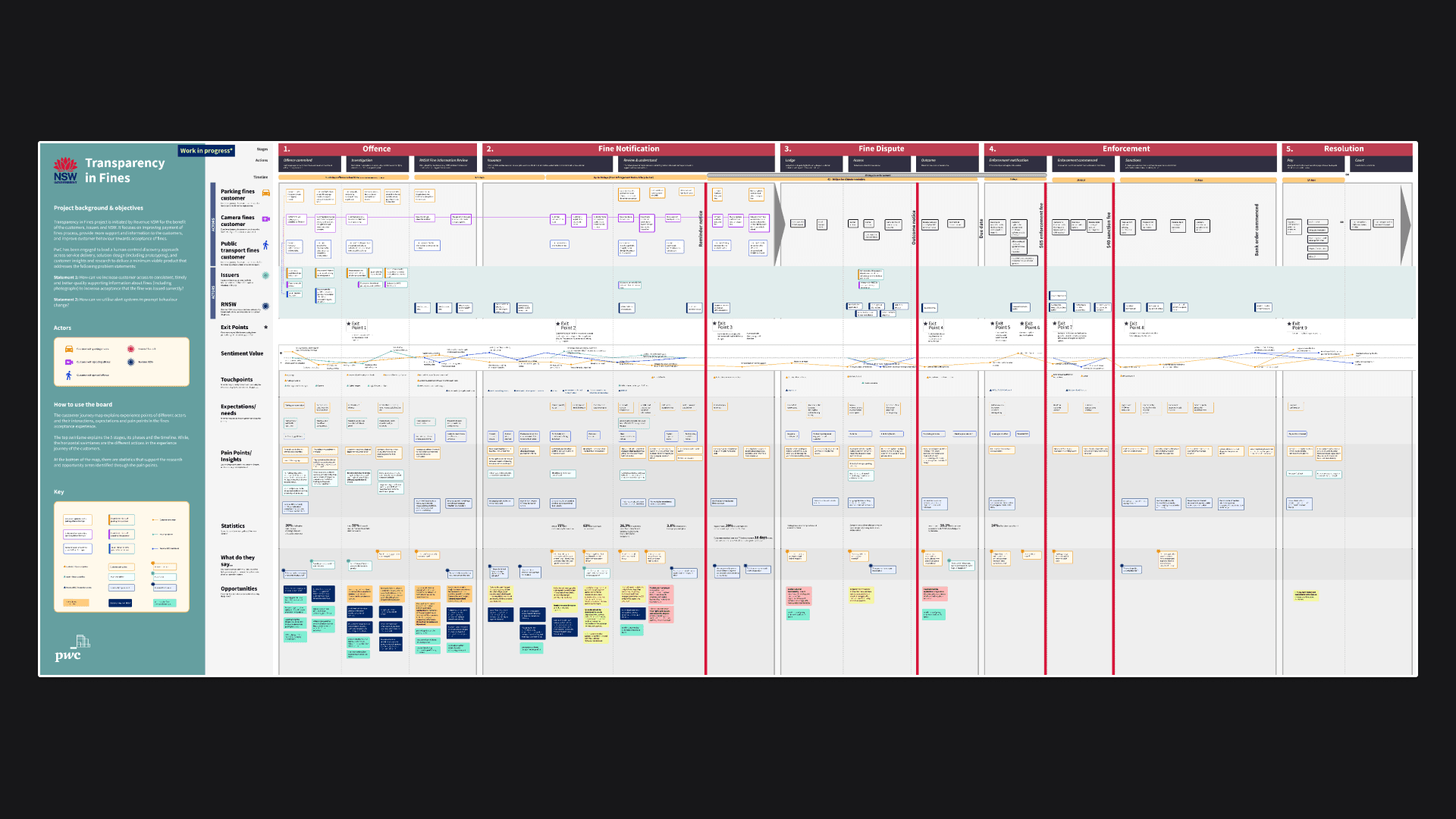
For journey mapping, I focused on the different stages in customers end-to-end journey, their experiences, sentiment value at different points, Interaction points, Digital actions, Back-end positioning, etc.
Below is the comprehensive journey map I designed after Insights generation. (Too big to be zoomed!)
The typical stages observed as: Offence stage (How does it occur?) > Fines notifications stage (The system is involved) > Fines Dispute stage (The system chasing them!) > Enforcement stage (The system taking an action) > Resolution stage (The court decides!)
Design Process
Our design approach was iterative and user-centric:
Creation of low-fidelity concepts based on key insights
Development of high-fidelity designs integrating existing NSW Revenue design systems
Design of UX flow concepts and user scenarios aligned with project requirements
Continuous refinement based on stakeholder feedback and user testing results
Solution
The final deliverables included:
A redesigned infringement notice with enhanced clarity and proof of infringement
A mobile app for comprehensive infringement details and integrated payment options
Improved communication touchpoints throughout the infringement lifecycle
User-friendly interfaces promoting transparency and trust
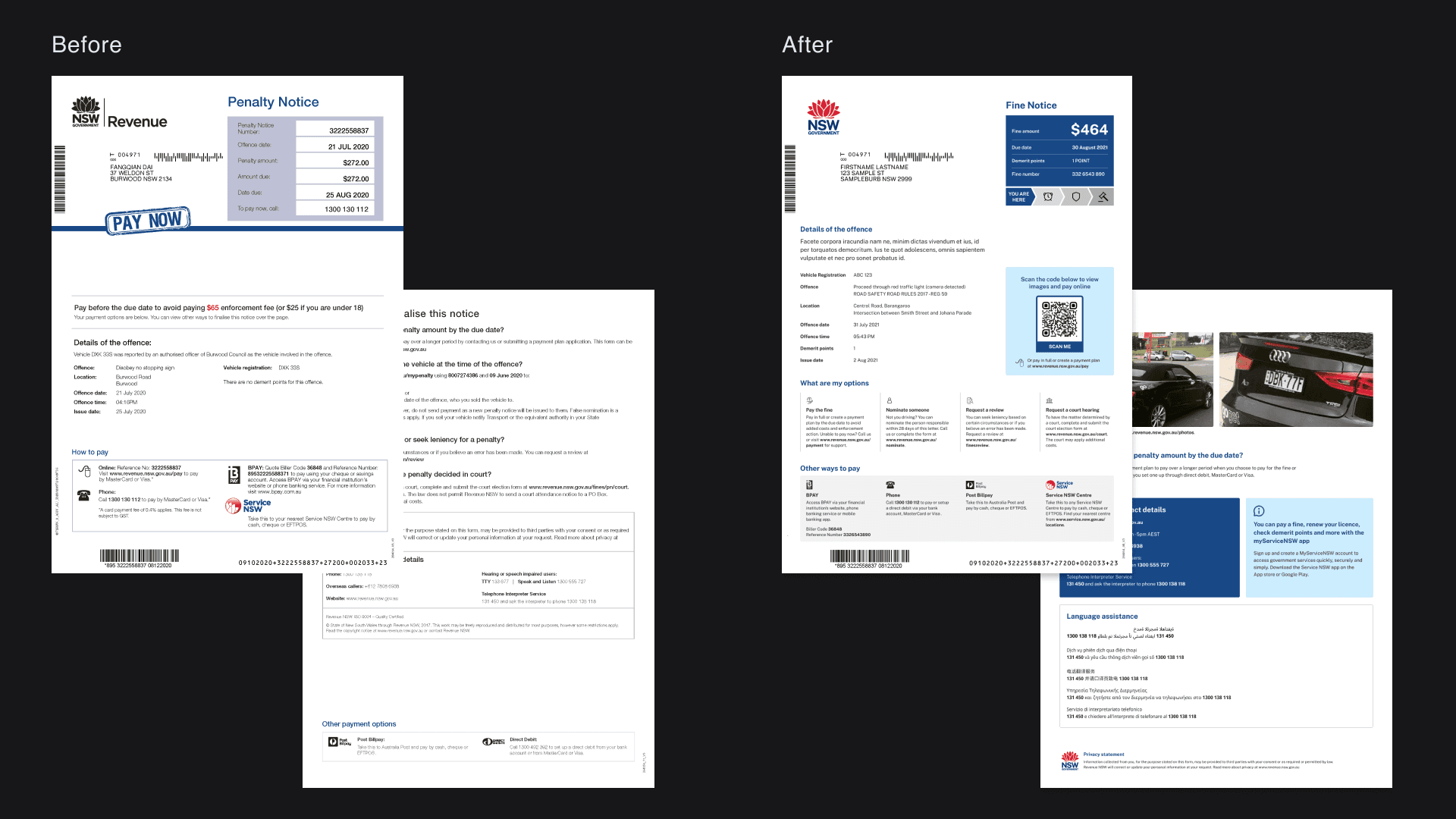
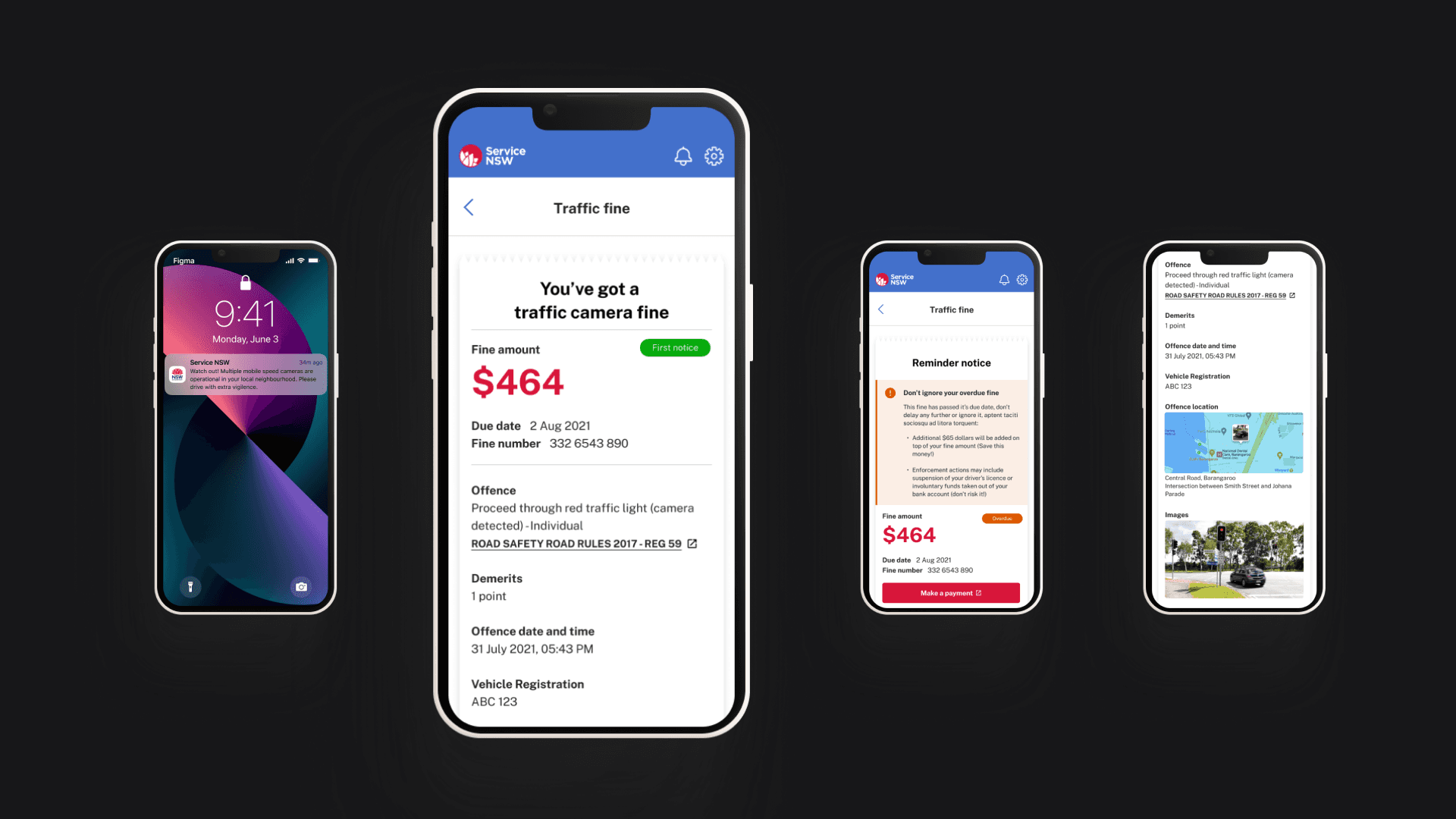
Below is the redesigned notice for the department. The major changes included changing the language from the previous infringement notice. The users felt words like 'PAY NOW' sounded more authoritative, urgent and stressful, where as there was no QR code, Proof of the offence and other payment plan details available before.
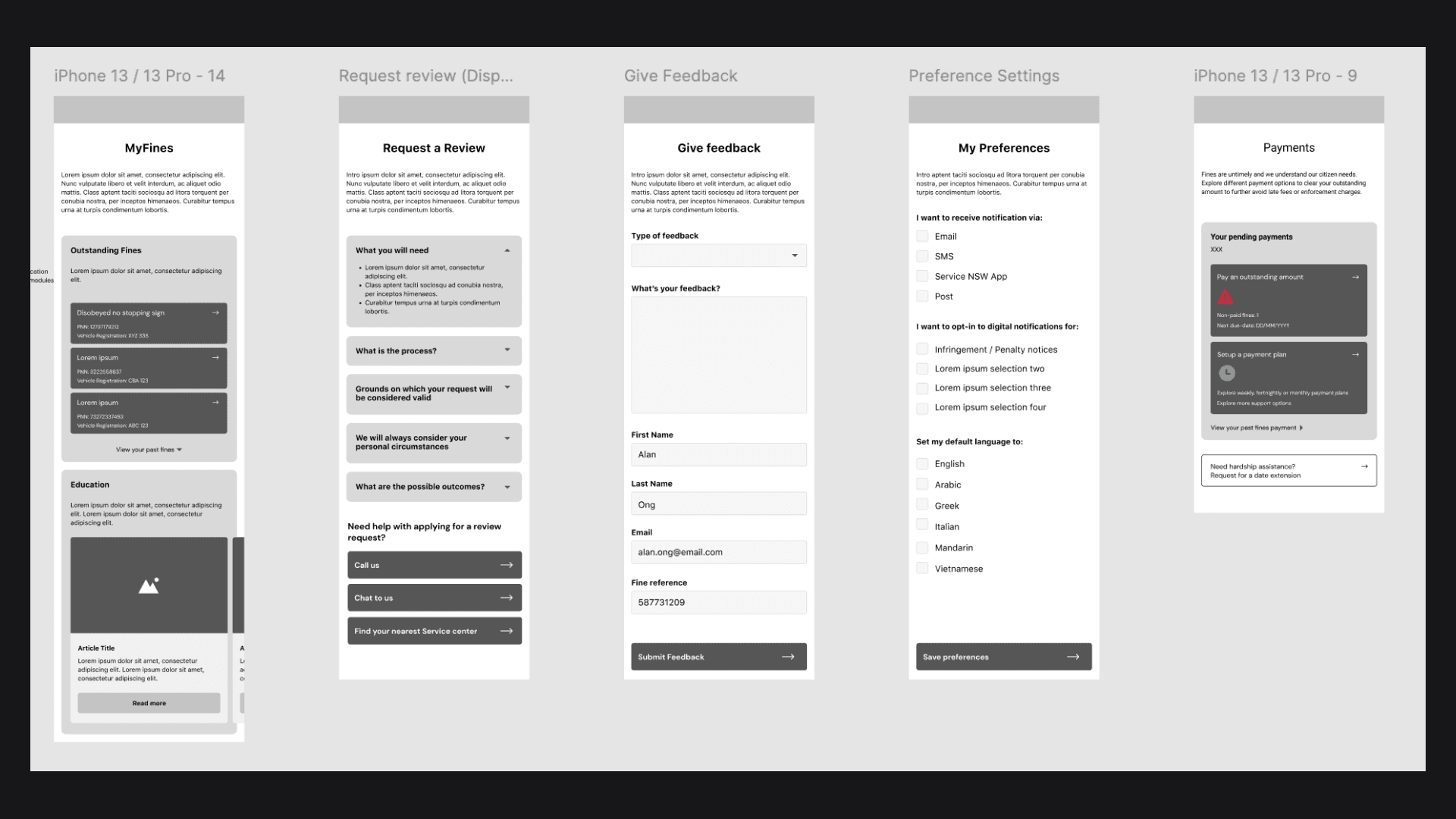
Low fidelity wireframes to explore early UI designs
High fidelity design aligned the NSW Revenue design systems and branding.
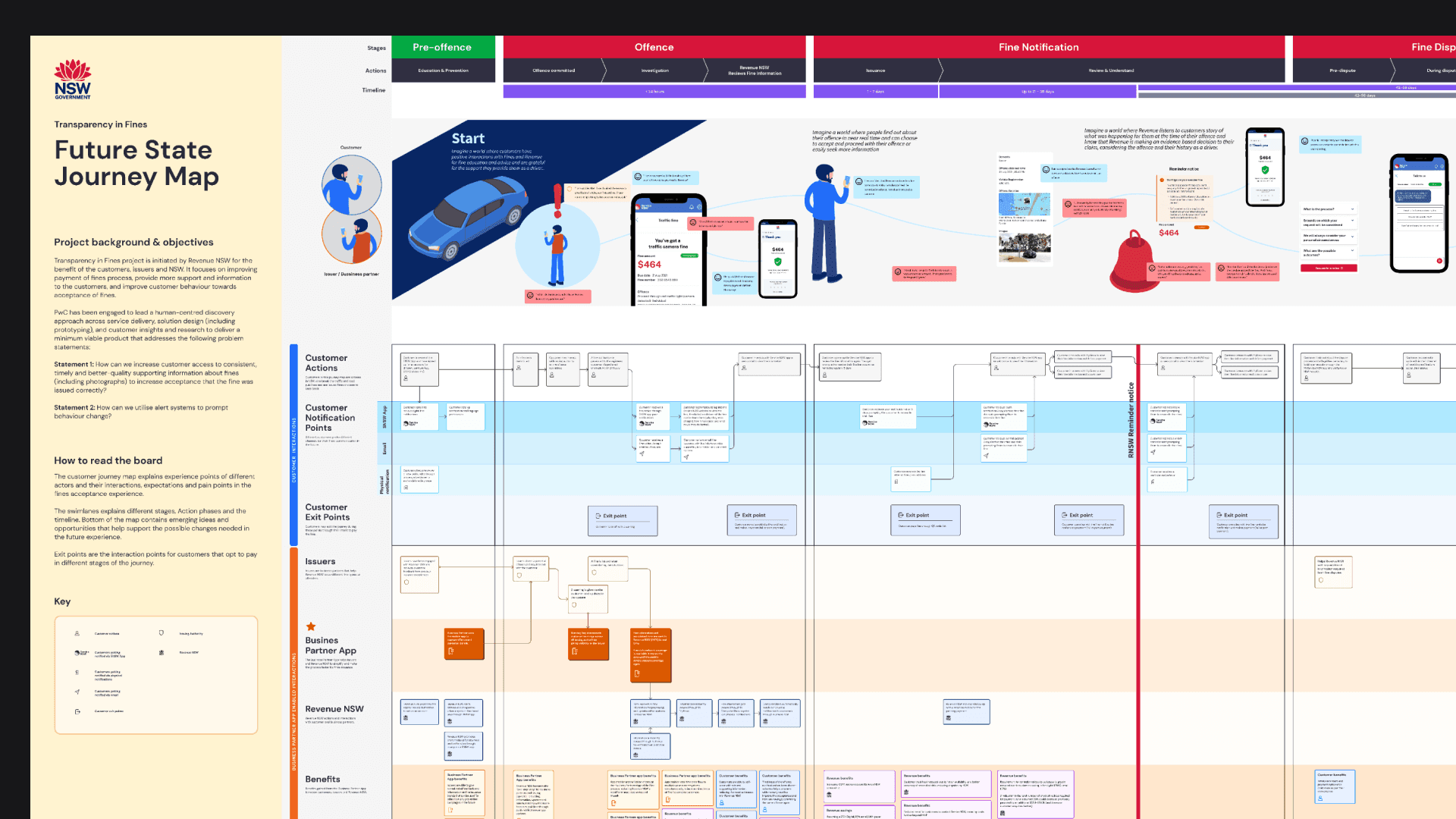
A future-state experience map explaining the new designed experience.
Impact and Results
While specific metrics are not provided, the project aimed to:
Increase trust in the infringement process
Reduce the number of overdue fines and court escalations
Improve citizen engagement and compliance with infringement notices
Streamline the payment process and increase on-time payments
Conclusion
This project showcased my ability to lead complex, multi-stakeholder initiatives and deliver user-centric solutions to critical government challenges. By leveraging advanced research methodologies, data-driven insights, and iterative design processes, we created a transformative solution poised to significantly improve the infringement management system for NSW Revenue and its citizens.
Solving NSW's Infringement Fines Management Experience
Overview
As a UX/UI Designer at PwC, I led a transformative 3.5-month engagement with NSW Revenue to address critical challenges in their infringement management system. The project aimed to rebuild trust, enhance digital transformation, and improve the overall citizen experience related to fines and infringements.
The Challenge
NSW Revenue faced significant issues with their infringement process:
Low trust in ticket officers and infringement notices due to insufficient proof
High rate of overdue fines and escalations to court proceedings
Communication breakdowns due to address changes or citizen negligence
Project Objectives
Our team was tasked with rebuilding trust between citizens and the NSW Revenue Department and Implementing digital transformation to provide more comprehensive infringement evidence. Further, we focused on Improving communication and instruction clarity and developing flexible payment plans to accommodate various financial situations.
Team structure
Our team was structured with a Strategy lead, Senior Researcher, UX/UI Designer (myself), Junior Business Analyst and Research graduate.
Taking a Customer-Centric and Design Thinking Approach To Understanding Core Problems.
We kicked off with our Discovery and Research
Our comprehensive research approach included:
Stakeholder interviews with department officials, NSW traffic police, and various infringement officers
One-on-one user research and focus group sessions
Analysis of existing technical systems
Quantitative and qualitative data analysis of infringement patterns across different suburbs and councils
Miro-facilitated focus group workshops with over 50 NSW residents who had received infringement notices
Discovery workshops and focus group studies. (Board too big to be zoomed!)
(Sharing some laughs with the police officer while interviewing them!)
Insight Generation
We utilised advanced tools and methodologies to synthesise our research. Using tools such as Dovetail for data aggregation, key insight highlighting, and pattern recognition, while also focusing on the development of comprehensive customer experience journey maps and future state maps. We staged identification of user actions, emotions, platform interactions, and exit points throughout the infringement process on the journey maps.
Mapping insights on a Customer Experience Map
For journey mapping, I focused on the different stages in customers end-to-end journey, their experiences, sentiment value at different points, Interaction points, Digital actions, Back-end positioning, etc.
Below is the comprehensive journey map I designed after Insights generation. (Too big to be zoomed!)
The typical stages observed as: Offence stage (How does it occur?) > Fines notifications stage (The system is involved) > Fines Dispute stage (The system chasing them!) > Enforcement stage (The system taking an action) > Resolution stage (The court decides!)
Design Process
Our design approach was iterative and user-centric:
Creation of low-fidelity concepts based on key insights
Development of high-fidelity designs integrating existing NSW Revenue design systems
Design of UX flow concepts and user scenarios aligned with project requirements
Continuous refinement based on stakeholder feedback and user testing results
Solution
The final deliverables included:
A redesigned infringement notice with enhanced clarity and proof of infringement
A mobile app for comprehensive infringement details and integrated payment options
Improved communication touchpoints throughout the infringement lifecycle
User-friendly interfaces promoting transparency and trust
Below is the redesigned notice for the department. The major changes included changing the language from the previous infringement notice. The users felt words like 'PAY NOW' sounded more authoritative, urgent and stressful, where as there was no QR code, Proof of the offence and other payment plan details available before.
Low fidelity wireframes to explore early UI designs
High fidelity design aligned the NSW Revenue design systems and branding.
A future-state experience map explaining the new designed experience.
Impact and Results
While specific metrics are not provided, the project aimed to:
Increase trust in the infringement process
Reduce the number of overdue fines and court escalations
Improve citizen engagement and compliance with infringement notices
Streamline the payment process and increase on-time payments
Conclusion
This project showcased my ability to lead complex, multi-stakeholder initiatives and deliver user-centric solutions to critical government challenges. By leveraging advanced research methodologies, data-driven insights, and iterative design processes, we created a transformative solution poised to significantly improve the infringement management system for NSW Revenue and its citizens.
Connect for a coffee?
See me in Melbourne or virtually :)
©2025 Kuldeep Jangid
Connect for a coffee?
See me in Melbourne or virtually :)
©2025 Kuldeep Jangid